Cross Line Laser Level Explained: A UK Buyer's Guide
Cross Line Laser Level Explained: A UK Buyer’s Guide
TL;DR: A cross line laser level projects perfectly straight horizontal and vertical beams that intersect at 90 degrees. It is an essential tool for fast, accurate alignment in UK trades like tiling, hanging cabinets, and studwork. Green beams are generally easier to see indoors than red ones. When choosing a device, prioritise accuracy, self-levelling range, and jobsite durability.
A cross line laser level is a precision alignment tool that projects intersecting horizontal and vertical laser beams onto surfaces, creating a perfect 90-degree reference point. By instantly establishing true level and plumb lines, this essential device helps UK tradespeople and DIYers ensure accurate, straight installations. Consequently, it can save a surprising amount of time on jobs that rely on repeatable alignment. Whether you are fitting kitchen units, hanging cabinets, marking out stud walls or setting tile lines, the right tool helps you work faster and with fewer corrections. Based on our extensive testing at LaserMeasu, we know that for UK tradespeople and serious DIY users, that reliability matters.
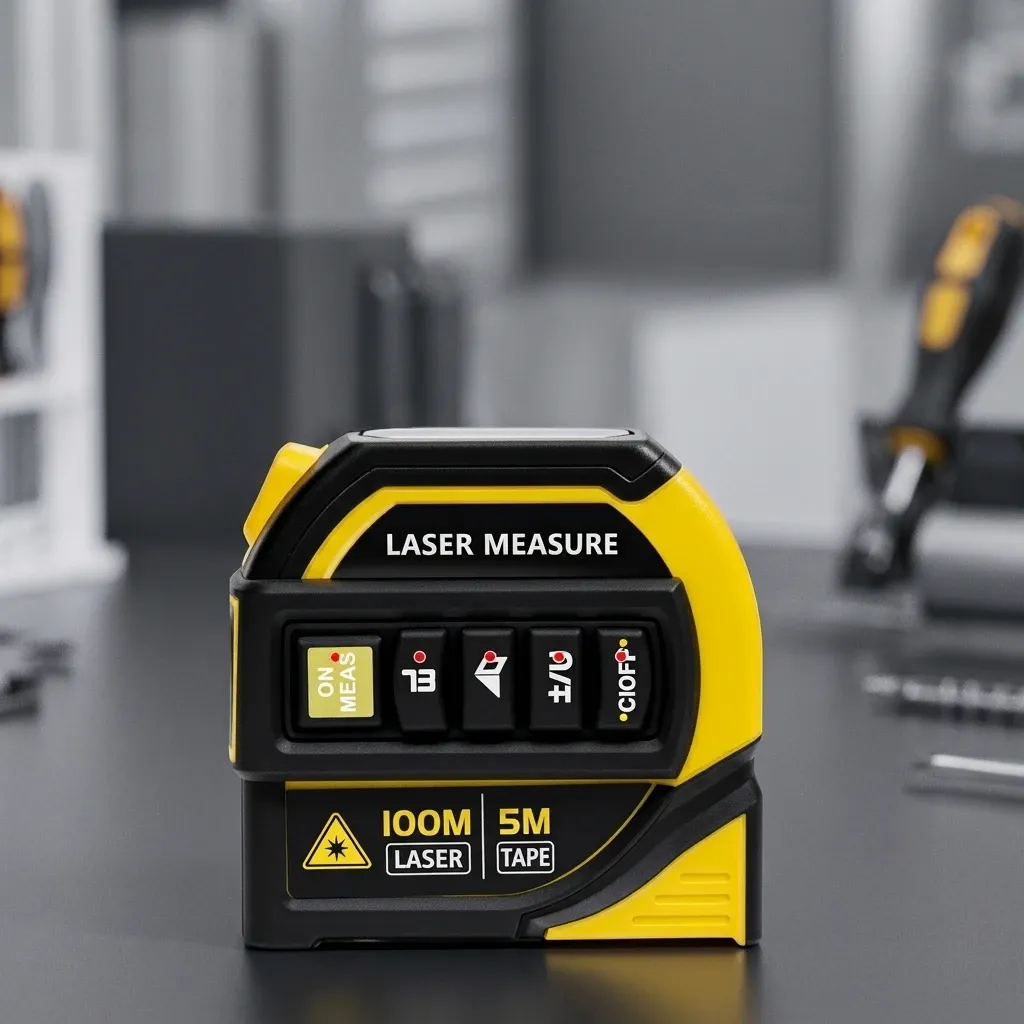
Furthermore, LaserMeasu’s approach is simple: ditch the bulky toolkit and carry one high-precision device that combines a 40m laser distance meter, 5m tape, cross-line level and angle finder. If you want a practical guide to what a cross line laser level does, how it works and what to look for before buying in the UK, this article covers the essentials without the sales waffle.
Key Takeaways
- A cross line laser level projects horizontal and vertical laser lines that intersect at 90 degrees for quick alignment.
- It is highly useful for tiling, shelving, cabinetry, studwork, decorating and general interior fit-out.
- Green beams are often easier to see than red in bright conditions, though visibility still depends on room light and range.
- Accuracy, self-levelling range, mounting options and durability are the main buying factors for UK users.
- A multi-function tool that combines a laser measure, tape measure, level and angle finder can drastically reduce kit clutter on site.
What is a cross line laser level used for?
A cross line laser level is primarily used to project one horizontal line and one vertical line onto a surface. Where those lines meet, you get a clear 90-degree reference point. As a result, that makes it far quicker to transfer straight lines across walls than relying only on a spirit level, pencil marks and repeated measuring.
In practice, it is used to establish true horizontal and vertical references. On many jobs, that means fewer manual checks and less chance of drift over longer runs. Additionally, it is especially handy when working alone because the projected lines act as an extra set of hands.
If you are comparing tools used for measuring as well as alignment, our guide to the laser distance meter explains exactly how distance lasers fit into everyday UK trade work.
How does a cross line laser level work?
The tool contains a laser diode and an internal optical system that spreads the beam into straight projected lines rather than a single dot. In self-levelling models, an internal pendulum or electronic mechanism automatically compensates for minor out-of-level positioning. Once within its operating range, the unit accurately projects true level and plumb lines.
Do I need a manual or self-levelling laser?
Manual models rely on the user to set the tool level using bubble vials. They tend to be simpler but are significantly slower to set up accurately. Conversely, self-levelling models are more common because they speed up setup and reduce user error.
For most indoor work in British homes, flats and commercial interiors, self-levelling is undoubtedly worth having. According to UK building guidelines for interior fit-outs, starting from an accurate reference line is important, particularly because older buildings across the UK rarely offer perfectly square or plumb surfaces.
Is a green or red laser level better?
Many buyers ask whether a green laser is better than red. In simple terms, green beams are generally perceived as brighter by the human eye under similar conditions. Consequently, that can make them much easier to follow indoors or in brighter spaces. If you want more detail on one popular format of cross-line unit, read our pillar guide: The Ultimate Guide to Stanley Cross 90 Cross Line Green Beam Laser Level.
Why UK trades and DIY users choose a cross line laser level
The appeal is not complicated: speed, consistency and cleaner results. Based on our site testing, a good cross line laser level helps reduce repeated marking out by projecting visible references exactly where you need them.
Common jobs where it earns its keep
- Installing kitchen wall units and base units
- Laying out bathroom tiles seamlessly
- Hanging shelves, mirrors and picture frames in straight runs
- Marking stud partition positions
- Aligning sockets, switches or wall accessories visually
- Setting curtain rails or blinds evenly across openings
- Levelling dado rails or decorative panelling
Useful on modern sites and older British properties alike
In newer builds, a laser speeds up repetitive installation work across multiple rooms. However, in older terraces or period homes where walls may be uneven or corners out of square, it helps you establish workable visual lines even when the structure itself is imperfect.
This matters because “level” and “looks right” are not always identical in renovation work. Therefore, a capable user can use projected reference lines to make informed choices before fixing anything permanently.
A practical answer to carrying too much kit
One reason combination tools are gaining traction is straightforward convenience. Carrying separate devices for measuring distance, checking angles, levelling lines and pulling tape adds unnecessary bulk. LaserMeasu’s product concept addresses that by combining a 40m laser distance meter, 5m tape measure, cross-line level and angle finder into one compact unit suited to tradespeople who want fewer items in the van.
What should I look for when buying a cross line laser level?
When selecting the right alignment tool for your toolbag, there are several crucial specifications to consider to ensure you get the best performance on site.
1. Accuracy tolerances
This should be your absolute starting point. Manufacturers usually state accuracy as plus or minus millimetres over a given distance. For interior finishing tasks such as shelving or tiling splashbacks, small deviations become obvious very quickly. Always check the stated tolerance rather than assuming all tools perform equally well.
2. Maximum working range
Your required range depends entirely on where you use it most. For many indoor domestic tasks in the UK, a modest range is enough. On the other hand, if you regularly work in larger open-plan spaces or commercial interiors, a longer visible range becomes highly useful.
3. Self-levelling range
This tells you how much tilt the tool can correct automatically during setup. A wider self-levelling range usually makes positioning easier on uneven floors or rough temporary surfaces commonly found on active sites.
4. Beam visibility indoors
A beam can be technically accurate yet hard to see in strong daylight or bright rooms with large windows. As previously mentioned, green beam models often improve visibility for interior work. If visibility matters most to you, compare real-world reviews rather than relying only on spec sheets.
5. Versatile mounting options
A decent unit should be easy to place on floors, surfaces or compatible mounts. Stable positioning reduces frustrating rework. Therefore, look for practical mounting arrangements if your jobs involve repeated height setting around rooms.
6. Build quality for site use
A trade-focused tool needs to cope with dust, knocks and being moved around vans and jobsites constantly. Good casing design and sensible button layout make more difference than flashy extras when you use the tool every day.
7. Battery life and charging convenience
If your working pattern involves long hours on site, dependable battery life is critical. Furthermore, modern USB charging options ensure your device is always powered up and ready for the next job.
Ready to speed up your workflow with LaserMeasu?
Upgrade Your Toolkit — £46.75